
Swiss Water Decaf: how it is made and how to brew it
Our Swiss Water Decaf is one of our best-selling coffees. How the Swiss Water Process removes caffeine without chemicals, how it tastes, and how to brew it at home.
 By Tiago
Published
6 min read

Decaf is no longer the odd one out. More and more people drink it, at home and in cafés, and our Swiss Water Decaf has become one of the coffees we sell most. It tastes like real coffee, with notes of nuts, chocolate, toffee and fudge, and you can drink it in the evening without lying awake. But what does “Swiss Water” actually mean, how is the caffeine removed without chemicals, and how do you brew decaf at home so it tastes its best? Here is everything you need to know.
What is Swiss Water Decaf?
Swiss Water Decaf is coffee that has been decaffeinated with the Swiss Water® Process: a method that uses only water, time and temperature to remove the caffeine. No chemical solvents are involved. Despite the name, the process does not take place in Switzerland. It is carried out by Swiss Water Decaffeinated Coffee Inc. near Vancouver, Canada. The company describes it as the first alternative to chemical decaffeination.
Coffee is always decaffeinated as green, unroasted beans. That means the decaffeination happens before we roast. Our Swiss Water Decaf starts as Brazilian coffee from Sul de Minas in Minas Gerais, is decaffeinated in Canada, and is then roasted by us every week in Amsterdam.
How does the Swiss Water Process work?
The process is based on a simple idea: caffeine dissolves in water, and so do the compounds that give coffee its flavour. The trick is to remove only the caffeine. According to Swiss Water, it works in four steps:
- Cleaning and hydration: the green beans are cleaned and soaked in water, so they swell and are ready for the next step.
- Caffeine migration: the beans are brought into contact with Green Coffee Extract: water that is already full of the natural flavour compounds of coffee, but contains no caffeine. Because the extract already holds those flavour compounds, they stay in the beans. The caffeine, however, moves out of the beans into the extract, until the beans are practically caffeine-free.
- Drying: the decaffeinated beans are dried at a low temperature with a lot of airflow, so they are stable and ready for the roaster.
- Filtering and reuse: the extract, now full of caffeine, runs through carbon filters that capture the caffeine. The clean extract is then used again for the next batch of beans.
Swiss Water controls time and temperature carefully for each coffee, because that determines how much of the original character remains.
How is it different from other decaf?
There are several ways to remove caffeine from coffee. The most common ones:
| Method | What removes the caffeine | Chemical solvents? |
|---|---|---|
| Swiss Water Process | Water and green coffee extract, caffeine captured with carbon filters | No |
| Solvent method (direct or indirect) | Methylene chloride or ethyl acetate | Yes |
| CO2 method | Carbon dioxide under high pressure | No |
With solvent methods, the beans themselves or the water they were soaked in come into contact with a chemical solvent, which is then removed again. With the Swiss Water Process, no solvents are used at any point. That is also why certifications such as organic can stay intact.
Does decaf taste different?
Every decaffeination process changes the bean a little, so honestly: yes, decaf is never exactly the same as the original coffee. But the difference depends mostly on two things: how gently the caffeine is removed, and how good the coffee was to begin with.
That is why we chose a Brazilian coffee for our decaf. Brazilian coffee has a natural sweetness, a full body and a soft acidity, and those qualities come through decaffeination well. We roast it medium-dark, which gives a round, sweet cup with nuts, chocolate, toffee and fudge, black or with milk. Read more about the coffee regions of Brazil, including Sul de Minas.
How much caffeine is left?
Decaf is not completely caffeine-free, but almost. In the European Union, roasted coffee may only be sold as decaffeinated if it contains no more than 0.1% caffeine in the dry coffee. In practice, a cup of decaf contains only a very small fraction of the caffeine in a regular cup.
How to brew Swiss Water Decaf at home
Thanks to its medium-dark roast, our decaf works with almost any method: espresso machine, bean-to-cup machine, filter machine or hand brew. Decaf does have a slightly different composition from regular coffee, so it can help to adjust your recipe. Swiss Water recommends using a little more coffee than usual, or grinding a little finer, and sometimes both. Use water of around 93 °C (give or take 3 degrees), and weigh both your coffee and your water for a consistent result.
Espresso: our recipe
This is how we brew our Swiss Water Decaf as espresso: 19.5 grams of coffee for 48 grams of espresso (ratio 1:2.46). That gives a sweet, round shot with plenty of chocolate, and its nutty character holds up nicely in a cappuccino or latte. Does the shot taste sour or thin? Grind a little finer. Bitter or harsh? Grind a little coarser.
Bean-to-cup machine
Our decaf is a good fit for bean-to-cup machines: the medium-dark roast gives enough body and sweetness for espresso and milk drinks. Start with a medium grind setting and a strong coffee setting, then adjust to taste. Clean the grinder when you switch between regular and decaf beans, so you don’t get caffeine from the previous beans in your evening cup.
Filter and hand brew
These are the recipes from Swiss Water’s brew guide:
| Method | Coffee | Water | Grind | Makes |
|---|---|---|---|---|
| Pour over (V60) | 22 g | 330 g | Medium coarse | 2 to 4 cups |
| Chemex | 47 g | 700 g | Medium coarse | 2 to 4 cups |
| French press | 61 g | 850 g | Coarse | 2 to 4 cups |
| AeroPress | 15 g | 200 g | Medium fine | 1 cup |
| Filter machine | 40 g | 850 g | Medium | 6 cups |
Then taste and adjust. Does the coffee taste sour or thin? Grind a little finer, or use a little more coffee. Does it taste bitter or harsh? Grind a little coarser. Change one thing at a time, so you know what made the difference. For more recipes, see our espresso and filter recipes.
Who is Swiss Water Decaf for?
- Evening coffee drinkers: people who love a cappuccino or espresso after dinner, without the caffeine.
- People who want less caffeine: for example a regular cup in the morning and decaf for the rest of the day.
- Anyone who simply loves the taste of coffee: a good decaf is not a compromise, it is just coffee.
Most of our decaf goes to people who drink it at home, but cafés, restaurants and offices use it too, so every guest can have a proper coffee. Read how our coffee for cafés and offices works.
Our Swiss Water Decaf
Our Swiss Water Decaf is a Brazilian blend from Sul de Minas, Minas Gerais, roasted medium-dark, with notes of nuts, chocolate, toffee and fudge. We roast it every week in Amsterdam and send it fresh, with the roast date on the bag. It is available in 250 g and in 1 kg bags. Order our Swiss Water Decaf, or see all our decaf coffee.
Frequently asked questions
Is Swiss Water Decaf chemical-free?
Yes. The Swiss Water Process uses only water, time, temperature and carbon filters. No chemical solvents are used.
Is Swiss Water Decaf 100% caffeine-free?
No decaf is completely caffeine-free, but the amount that remains is very small. In the EU, decaffeinated roasted coffee may contain no more than 0.1% caffeine.
Can I use Swiss Water Decaf in a bean-to-cup machine?
Yes. We roast it medium-dark, which works well in bean-to-cup machines as well as in espresso machines and for filter.
Sources: filter recipes and process description from Swiss Water: Swiss Water brew guides and Swiss Water decaffeination process.
Coffees from this article

 BestsellerRoast: Medium-dark


Keep reading
All articles →- Coffee knowledge
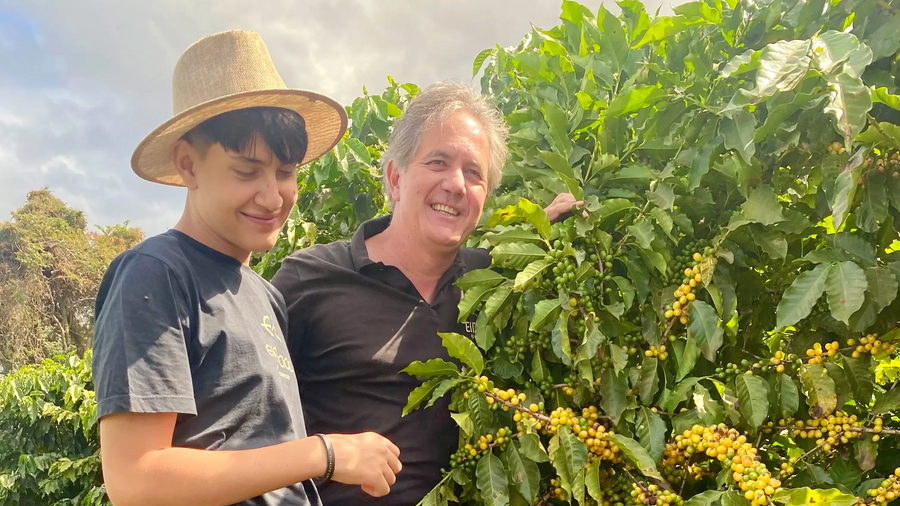
What does Brazilian coffee taste like? Where the difference lies
What can you expect from Brazilian coffee beans? We explain the flavours, how region and processing shape them, and why Brazuca buys directly from farmers.
- Coffee knowledge

Why Your Filter Coffee Tastes Like Passion Fruit?
It was a quiet morning when I brewed a cup that changed everything. The bag said "passion fruit", and honestly, I rolled my eyes. But then I took a sip. And there...
- Coffee knowledge

What is fruit-forward coffee? Where the fruit comes from
Fruit-forward coffee tastes of berries, stone fruit or citrus, without any flavourings. What it is, where the fruit comes from, and which Brazilian coffees show it best.

